
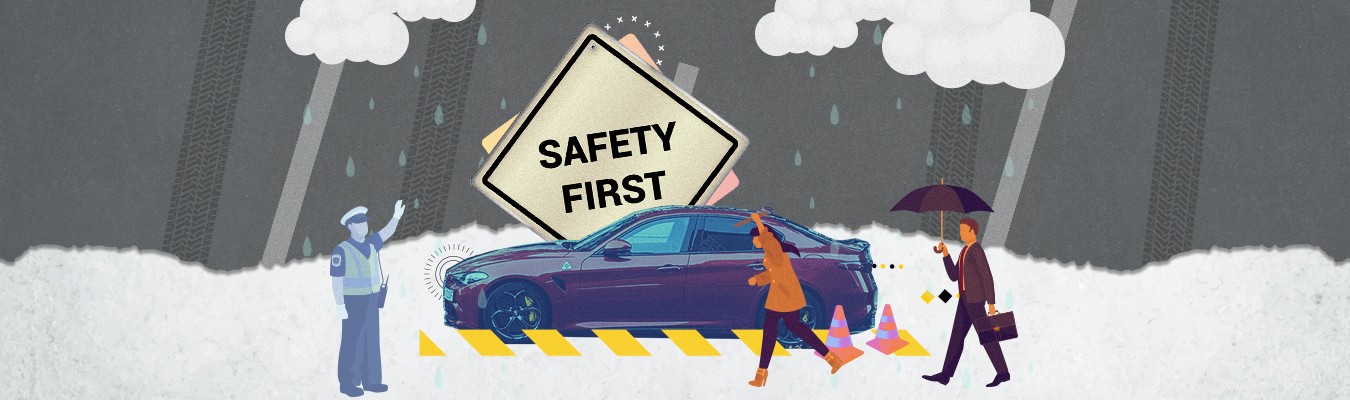
Summer in the Philippines officially ends when gradual downpour, strong winds and unpredictable weather occur. Albeit typhoon has entered the country earlier than the normal this year as typhoon Vongfong or locally named as Ambo impacted the country on May 10 which first hit the east of Mindanao.
Most part of the country can be easily impacted by heavy downpour that usually results to half-day flood, massive traffic, and the most affected are the stranded commuters—from students to adults. And these unfortunate situations oftentimes lead to road accidents.
According to the World Health Organization (WHO), road accident is one of the ten major causes of deaths among the people globally. While yearly, there are at least 270,000 deaths due to road-related accidents particularly during rainy season.
During rainy season, it is unavoidable for everyone to go out and deal with the heavy traffic just to get to work or school, hence, getting stranded. So there is nothing that we can do but to practice extreme caution—for both drivers, and commuters even during the COVID-19 outbreak, as the Department of Education plans to formally start the school year for 2020 on the 24th of August. The good thing is that we list down tips for your road safety and comfortable commuting during the rainy season.
FOR COMMUTERS
Bring your extra slippers
Since the weather is unpredictable, you never know when you’ll get caught in the middle of heavy downpour and you don’t want to get your shoes wet, you might want to always bring an extra slippers with you. You may not look fashionable, but at least, you will not have to sacrifice your pair of shoes. Also, you have to make sure to wash your feet ASAP when you get home or when you arrive at your office to avoid catching diseases from the flood.
Always bring alcohol and face mask
This can also be helpful to prevent catching common diseases during rainy days.
Bring an automatic umbrella
Umbrella is the most important thing that you must not forget to bring during rainy season if you do not want to get home dripping wet. It is also recommended to use an automatic one basically because it is more handy and easy to operate—with its button that you just have to click to open and close effortlessly compared to the traditional umbrellas.
Keep your phone charged
For emergency purposes, always make sure that your phone is fully charged before leaving your home or office because you don’t know when you would get stranded due to heavy rainfall. This is for you stay in contact with your family and keep updated with the current weather. If you have a powerbank, better to keep it charged as well.
FOR DRIVERS
Be extra cautious
Drivers should practice extreme caution while driving in the middle of a heavy rainfall as grease and oil add up the water from rainfall which makes the road become slicker and makes it more dangerous.
Brake earlier
Highway accidents are oftentimes because of abrupt braking which might result to hitting three or more cars. If you brake earlier, you will have enough time to gradually push the brake as it decreases the friction of your tires to the road and avoid possible accidents.
Observe safe distance
Drivers should observe and maintain a safe distance from other vehicles because during wet season, drivers need more space and time to respond and avoid accidents waiting to happen. Also, avoid getting near large vehicles in the likes of buses and trucks as they have blind spots and unaware of other vehicles.
Drive slow
Regardless if it’s rainy or dry season, drivers need to adhere to the speed limit for everyone’s safety. Of course, it is more dangerous if the road is wet as your car’s reaction or response time becomes much slower when raining.
Double check your car condition
Always make sure that your car is in perfect condition before leaving considering a rainy weather. Check your headlights, tail lights, and windshield wipers to make sure they are going to work well when needed upon hitting the road. You also have to check your tires as balding tires result to reducing its grip mostly on wet roads.
According to Metropolitan Manila Development Authority (MMDA), August, September, and October are the most dangerous months to drive along Metro Manila roads. These rainy months have already recorded more than 10,000 car accidents in 2018, according to an MMDA report. Hence, safety precautions for both commuters and drivers should be practiced to avoid possible accidents.
Related Reads
What's New
More Articles


