

The food industry is one of the most affected sectors due to the pandemic. Many are probably wondering what will the dining setup be like in the new normal setting.
Fast food and restaurant-goer will never have the chance to experience the pre-pandemic way as the Department of Tourism (DOT) released a set of guidelines for the Department of Tourism (DOT)-accredited restaurants and restaurants in DOT-accredited accommodation establishments (such as hotels and resorts) on June 9.
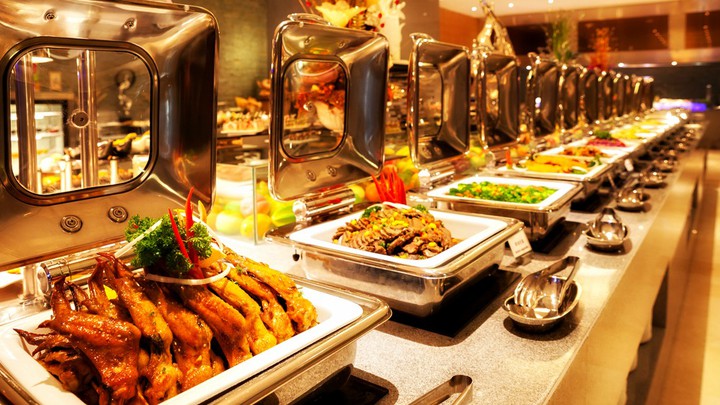
Some of the general rules include the requiring of face masks at all times and the prohibition of buffets and self-service stations.
Once all restaurants, fast food chains, and other food stores re-open and get the go signal to operate, here are the things we should expect:
RESTAURANT OWNERS
- Owners must ensure their employees fill out a Health Declaration Form prior to starting their duty.
- Owners have to monitor the body temperature of their employees every time they report to work.
- Owners must also provide their employees with food safety apparel, which includes hairnets or hair caps, face masks, face shields, gloves, aprons, and shoe covers.
- Owners should ensure their employees are trained and regularly updated on health concerns by installing a safety bulletin board.
- Owners have to ensure the restaurant premises are properly disinfected and sanitized frequently.
- Owners should make sure all employees undergo an annual health check-up.
- Owners shall set a maximum customer capacity for the establishment at 50% of the seating or venue capacity
RESTAURANT WORKERS AND STAFF
- Employees must ensure proper hygiene and good grooming.
- Employees shall wear Food Safety Apparel provided while on duty.
- Food attendants and kitchen personnel shall wash hands with soap and water for 20 seconds, before preparing and after handling food.
- Employees should avoid touching ready-to-eat foods with their bare hands.
- Employees need to observe physical distancing of at least one meter from one another while working.
- Client-Facing staff such as waiters, cashiers, and bussers shall wash their hands with soap and water at least every 20 minutes.
- Employees must emulate the “Clean As You Go” policy by keeping the work area clean and tidy continually throughout the working day.
- Employees shall not loiter in other areas outside of their work stations.
THE RESTAURANT SETUP
- Establishments can only seat up to 50% of the maximum seating or venue capacity.
- Disinfectant mats shall be placed at the entrance of the restaurant.
- The seats should be arranged such that it allows customers to stay one meter apart.
- The distance between the backs of each chair should also be more than one meter apart.
- Face-to-face seating is only allowed if there are transparent dividers—such as acrylic plastic, plexiglass, or sneeze guards—between them.
- "As far as practicable," handheld menus are to be replaced with a menu to be displayed on the counter or other visible areas.
- Visible signs must be installed reminding people to wash their hands or to disinfect with alcohol upon entering and leaving the restaurant.
- There shall be designated zones for pickup and takeaway, with clearly demarcated queue lines that allow for physical distancing between guests.
- Alarm systems may be installed to remind employees to wash their hands rigorously every 20 minutes.
- Self-service and condiment stations, buffets, salad bars, and other leisure facilities such as karaoke machines and in-house play areas are banned.
CUSTOMERS
- Customers not wearing masks won’t be allowed inside the restaurants. These masks are to be worn at all times, except when eating and drinking.
- Before entering, customers have to get their body temperature checked. Those with a fever or with flu-like symptoms won’t be allowed to enter.
- Customers are to fill up a health declaration form before entering.
- Customers are to sanitize their footwear using sanitizing mats and drying pads installed at the entrance.
- Customers are to provide their name and contact details in a contact-tracing log sheet to be provided by the restaurant.
SERVICE AND OTHER PROCEDURE
- Single-use items, such as napkins, utensils, and condiments, are to be given to the customers wrapped in biodegradable packaging.
- Cashless payment, done via money transfer applications such as GCash, is encouraged, though employees can also hand and receive cash through a small tray.
- It is also advised that restaurants adopt a pay-as-you-order policy.
With all these new normal adjustments, we all should take all of the guidelines provided by the government to ensure our safety.
Related Reads
What's New
More Articles


