
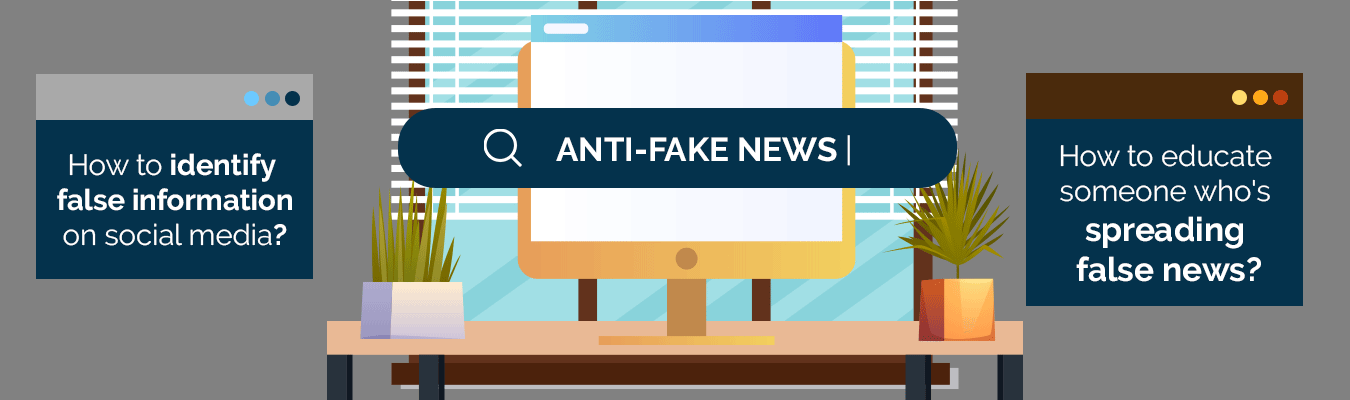
In the middle of crisis brought by COVID-19, virus is not our only enemy today. There’s also an uncontrollable spread of false news that trigger panic and misinformation to the public.

The different types of fake news are:
Clickbait - fabricated stories with sensational headlines to grab attention and spread inaccuracy.
Propaganda - misleading stories that promote biased perspectives and political agendas.
Satire - fake news stories made for entertainment and parody.
Sloppy Journalism - news published wih unreliable information and deluding false facts.
Misleading Headings - news where only headlines and small snippets are seen on newsfeed. Stories are fusions of both false and factual data.
Fraud - completely invented stories used for advertisements and politics.
Developing a critical mindset is the first step to spotting fake news. Here are few things to consider when you get to encounter a suspicious news or information online:
In verifying information found online, it’s a must to look for similar stories posted across verified and trusted news sources and authorized agencies such as BBC News, CNN, FOX News etc. So in order not to be victimized by false news and information, it’s best if you only subscribe to these legitimate and authorized online communities and organization to gather factual current events and updates such as COVID-19.
Make sure the publishing site or community meets the academic citation standards. (click here to know more about the standard academic citation)
Check the author.
Do not compromise media and information literacy over the chance of being the first one to share such breaking news.
Reference:
https://www.facebook.com/MBTechNews/posts/2584090121696442
https://twitter.com/Michelanjolo_/status/1247120100647264256
Related Reads
What's New
More Articles


