
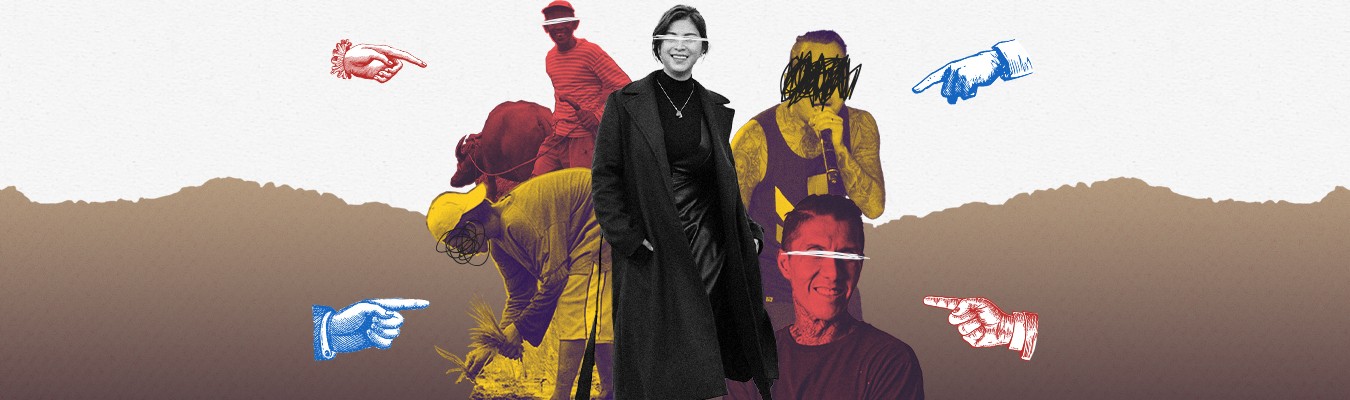
Stereotyping, body-shaming, racial discrimination, and stigma are some of the issues seen in the learning modules of the Department of Education (DepEd) which earned the public ire and dismay, isn’t it alarming?
Over the past months, netizens have been sharing some photos containing ‘controversial’ questions from the modules that imply physical discrimination and gender-stereotyping, it eventually sparked many debates and talks in the country and even categorized by known women’s advocate group Gabriela as ‘backward and dangerous ideals’ approach in the system of learning.
What are the issues evident in the learning module of DepEd?
BODY-SHAMING
The issue of body-shaming started when actress Angel Locsin was mentioned in a Physical Education material and described her as an “obese” person.
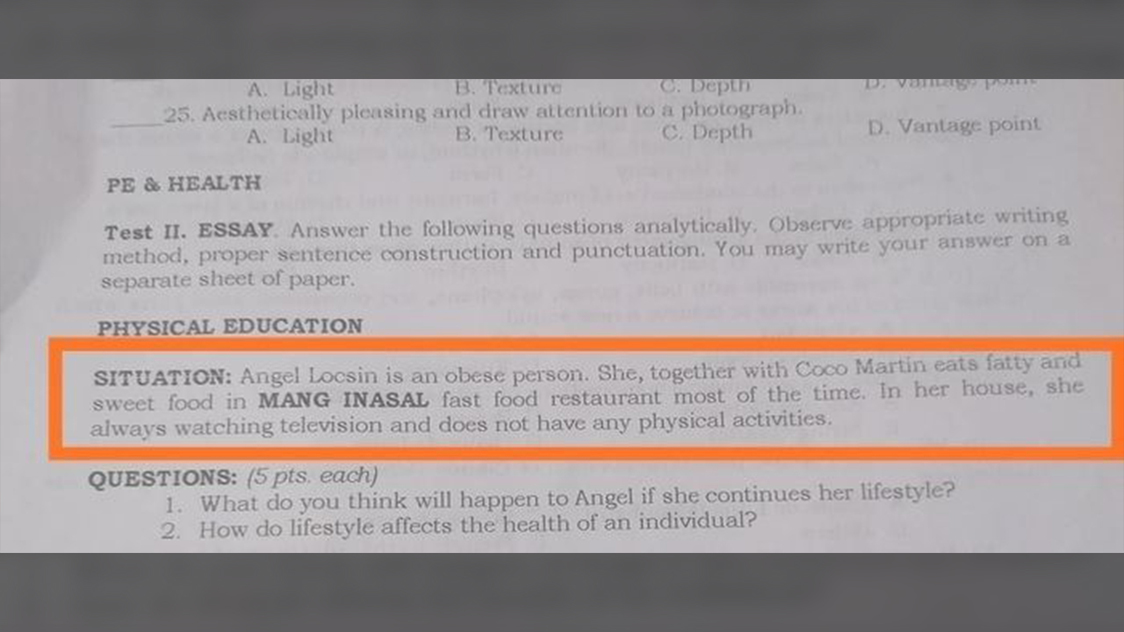
Locsin hit DepEd and said that the department should be held accountable and “must correct.”
In a Facebook post, she said that she wanted to ignore the issue in the first place, but what kept her bothered was the incorrect grammar and discrimination being taught to the children.
“What bothers me most is apart from teaching incorrect grammar to the students, DepEd seems unaffected that the said teacher is teaching bad conduct and sowing discrimination among the children,” Locsin added. “Anong mangyayare sa future kung ang mga kabataan ay tinuturuan ng pambabastos at pangungutya sa kapwa?” she further said.
STEREOTYPING
One of the sensitive cultures being tackled in the learning module is the gender-stereotyping.
Photos of questions have circulated on social media about the context of rampant gender categorization which made the children confused.
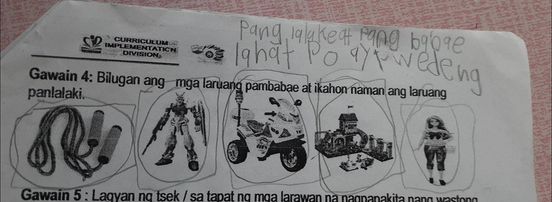
In the photo, a grade 1 student is untroubled by gender stereotypes surrounding children’s toys. In the worksheet, students are instruct
ed to encircle toys that are for girls and box those for boys. The choices include jumping rope, robot, motorcycle, castle, and a Barbie doll.
The child encircled and boxed all toys. Her sister who was tutoring her said the answers were wrong, and she might get zero marks, but she insisted that ‘toys are toys’ and can be played by both genders.
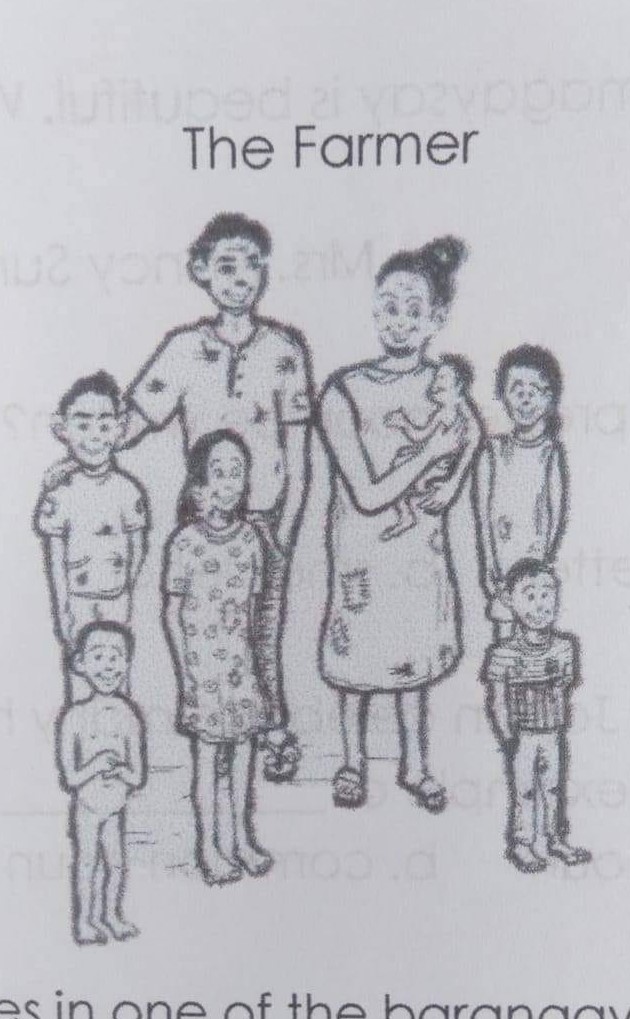
One of the most recent mistakes in one of the learning modules was the “poor” depictions of farmers wherein the issue of stereotyping is evident among them.
In the photo, the family was clearly described as impoverished human beings who wear ratty clothes.
Senator Kiko Pangilinan stressed during the budget briefing of the DepEd that stereotyping in learning materials is not acceptable since it could impact the perception of learners.
“Karamihan ng ating magsasaka ay mahirap, pero kung ganito ang presentasyon… Mahirap ho sila, pero parang dito ang stereotyping eh parang kasuklam-suklam (Many of our farmers are not rich, but the representation should not be like this… They are poor, but your stereotyping is making them look repulsive),” Pangilinan said.
This is clearly a manifestation of a wrongful representation which can make a wrong impression on the children.
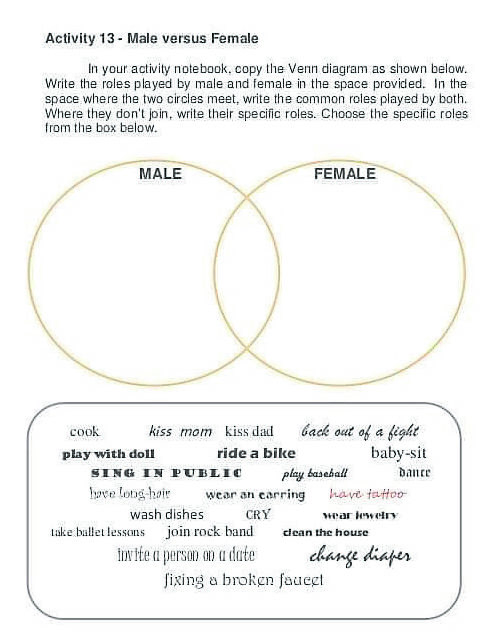
In a social media post from DepEd's regional office in Central Visayas, a learning material shows a Venn diagram where students are asked to list down specific roles men and women play in society.
Undersecretary for Curriculum and Instruction Diosdado San Antonio at a television interview recognized that the agency should modify the errors, along with others that have been raised before.
He told that these mistakes are ‘archaic’ and observed during the early times which is unacceptable in this modern age.
On November 17, actress Lea Salonga expressed disappointment over a part of a learning module implying people with tattoos are “criminals.”
In the photo posted by Salonga, students were asked to determine what a tattoo symbolizes.
Based on the answer key provided in the module, the correct answer was A, or "being a criminal." It lit up many debates and discussions over social media but later on Education Undersecretary Diosdado San Antonio acknowledged the misstep and said DepEd has already issued an erratum.
RACIAL DISCRIMINATION
This error about racial discrimination was spotted by Cebu City Mayor Tommy Osmeña.
“This is the homework of my friend’s grandchild. This is both hilarious and sad, and should be brought to DepEd’s attention,” he said in a Facebook post.
He pointed out that we should not raise a child to judge fellow Filipinos based on skin color and physical features.
Why these cultures are still evident in this modern age?
According to a blog posted by the Hope College in America, the way we think creates stereotypes, we think in terms of the categories we create from our experiences. Those categories clarify the world for us, but they also over-simplify it.
Assumingly, there were no formal accounts in the history of how stereotyping started. It said that ages ago people start to adjust and make it a standard representation, an oversimplified opinion, a prejudiced attitude, or an unconsidered judgment about someone or something.
For body-shaming issue, it says in an article published by daily.jstor.org that According to Forth, the French and English became obsessed with fatness in Africa and Asia at a time when they were worried about their own expanding waistlines. With the riches brought by the exploitation of their colonies, Forth writes, they were eating more than ever, “firing the fantasies of foreign tourists who hoped to spy a legendary fat Englishman waddling along the street.”
With these thoughts, it can be inferred that the western influence has played a major ‘role’ in defining what a body size and type for men and women must be which later on became a ‘standard’ but eventually breaks a lot of barriers.
Based on the early accounts of history at an early age, Racism has always been a major issue when it comes to social discrimination. Between 1525 and 1866, 12.5 million people were kidnapped from Africa and sent to the Americas through the transatlantic slave trade. Only 10.7 million survived the harrowing two-month journey.
The date and the story of the enslaved Africans have become symbolic of slavery’s roots and the beginning of ‘racism’ where skin color is associated with slaves.
With regards to the endless issue of racial discrimination, white and blacks views are still evident and a problem nowadays but indeed opened a lot of possibilities for an equal and understanding world.
I don’t know why we are still haunted by the horrors of these social issues in the modern age. The world is evolving but our views, perspective, and ideologies are certainly left behind.
The lapses on the DepEd’s module are a vivid manifestation of what our world today, yes we embrace modernity but the system and mind are halted by standards.
How about you, what can you say about these social issues on the learning module?
Related Reads
What's New
More Articles


