
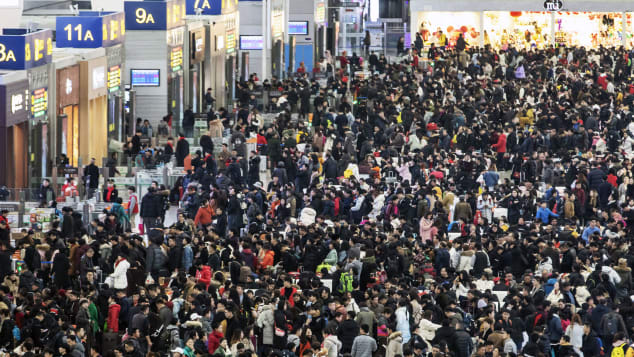
Ordinarily at this time of year, hundreds of millions of Chinese citizens would be packing highways, trains and planes for vacations to celebrate the Lunar New Year with their family.
But this year, due to the existing coronavirus pandemic, the largest annual human migration in the world has been halted, in compliance to the Chinese government's call to avoid "nonessential" trips during the holiday period to prevent a resurgence of the COVID-19.
The Lunar New Year, also known as Spring Festival in China, is the most important holiday in the Chinese calendar — the equivalent of Thanksgiving, Christmas and New Year's Eve combined.
According to an article published by The New York Times, the local authorities in China have ordered the people visiting rural areas during the holiday to spend two weeks in quarantine and pay for their own coronavirus tests.
“Many migrants, who endure exhausting jobs for meager wages in big cities, say those restrictions make it impossible to travel,” the article said.
Qilai Shen/Bloomberg/Getty Images
The implementation of the rules has drawn flak in China, as many people calling the rule unfair to migrant workers, who have long been treated as second-class citizens under China’s strict household registration system. The local workers have been among the hardest hit in China due to the pandemic, as the authorities have implemented lockdowns in different cities to fight the virus, hence, employers have reduced hours and pay.
For many Chinese families, the Spring Festival will be celebrating a second year that the pandemic has kept them apart. Last year, just few hours before the start of the Lunar New Year, the authorities imposed sweeping lockdowns and suspended trains and planes across the country. In a matter of hours, more than 35 million people in the city of Wuhan and the surrounding areas were ordered to stay at home.
Chinese authorities are worried that the widespread travel could trigger a surge to new COVID-19 outbreak, particularly in rural zones, where testing is more uncommon and there has been a usual quarantine violation and other public health measures. While China's outbreak is moderately maintained compared to other countries and life is largely normal in many cities, clusters of new cases have emerged in recent weeks, prompting sporadic lockdowns and mass testing efforts.
Although there is a quarantine protocol during the holiday, the officials still expect hundreds of millions of people to travel during the Lunar New Year season, which lasts from January to March, despite the threat posed by the virus. Also, the Chinese government, in response to the migrants’ backlash over the new restrictions, has tried to offer goods, including gift baskets, activities and shopping discounts, to encourage them to follow.
Related Reads
What's New
More Articles


