
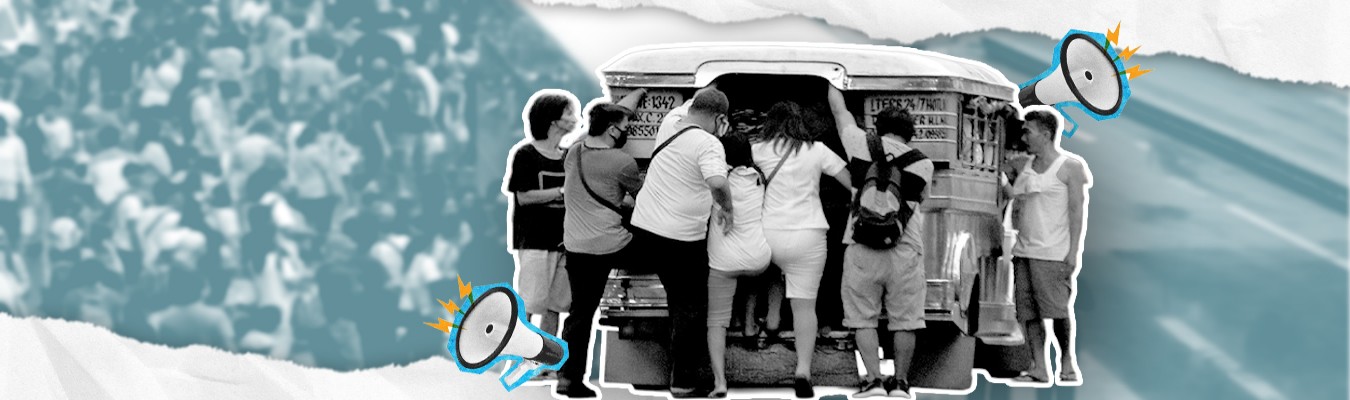
Mahabang pila. Siksikan. Mabigat na trapiko.
This is what Filipinos experience every single day.
Filipinos are trapped in an endless loop of long and tiring commutes. They always go through long lines, compete over who gets to enter the jeepney or MRT first, and have their patience tested while stuck in traffic.
Sometimes, Filipinos need to wake up extremely early for work or school. Instead of getting another hour of sleep, they would always sacrifice that hour just to arrive early or on time.
Yet despite making the extra effort, they would still end up late. Sometimes, they are even blamed for their tardiness. But is being late really their fault?
This is where the sociological imagination enters.
Sociological imagination is the capacity to see how individual struggles are linked to wider public issues. It is a concept introduced by sociologist C. Wright Mills (National University, 2021).
Applying this to the commuting system, one personal struggle that commuters face is tardiness. Despite waking up early and trying their best to arrive on time, they would still end up being late. And this personal struggle can be connected to the commuting conditions that many people experience.
And when personal problems are collectively shared by numerous people, they become an expression of larger social issues that need to be addressed.
Tardiness is not always a matter of poor time management. For Filipinos, long queues, overcrowded public transportation, and heavy traffic are significant factors that contribute to delays.
When scrolling through social media, you can see numerous people sharing these commuting struggles. This shows that tardiness is not just a personal problem, but a shared experience among millions of Filipinos caused by the poor conditions of our transportation system.
According to the 2025 TomTom Traffic Index, the Philippines had the highest level of traffic congestion in Asia.
Moreover, based on a February 2026 position paper by the PARA Commuters Network that was cited by Kabataan party-list Representative Renee Co, around 49 million individuals depend on public transportation every day, with 25 million relying specifically on jeepneys. And people would wait over an hour just to ride one.
And the Department of Transportation (DOTr) reported that the Metro Rail Transit Line 3 (MRT-3) recorded its highest daily passenger count of 502,264 on September 16.
Long waiting times, overcrowded transportation, and heavy traffic can affect a person's ability to arrive at work or school on time. What may seem like a simple case of tardiness is actually linked to a poor transportation system.
And for this endless loop to end, the government must fix the commuting system by building transport infrastructure that serves the broader public interest rather than primarily benefiting private entities, creating a system that works for the people who depend on it instead of forcing them to endlessly adjust to a system that does not give them the quality of transportation they deserve.
Related Reads
What's New
More Articles


